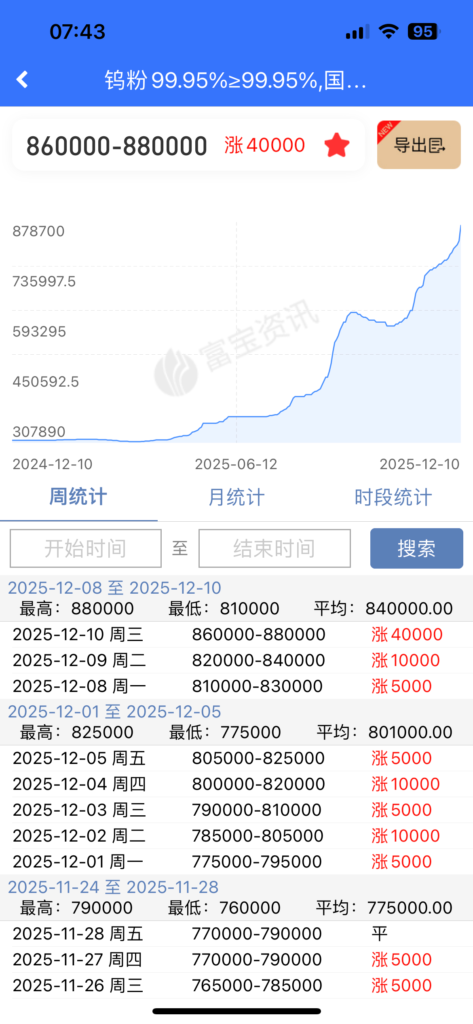
The price of tungsten powder breaking through the critical threshold of ¥1,000 per kilogram represents a significant shift for the supply chain. Here are some possible directions in which the supply chain might adapt to this change:
1. Price Increase Reflection: Rising tungsten powder prices may lead to increased costs for downstream industries such as electronics, metallurgy, and aerospace. Some companies may begin to consider adjusting prices to maintain profit margins. Simultaneously, some industries may seek alternative materials, especially in cost-sensitive applications.
2. Supply Chain Diversification: Price volatility in tungsten powder may prompt many companies to diversify their supply chains and seek more sources of supply. Especially given that tungsten resources are concentrated in a few countries, supply chain managers may focus more on building partnerships with suppliers in other countries to reduce reliance on a single source.
3. Inventory Strategy Adjustments: Faced with tungsten powder price volatility, companies may adjust their inventory management strategies. For example, some companies may increase inventory reserves to cope with the uncertainty of future price fluctuations. Others may adopt leaner inventory management strategies to minimize inventory pressure. 4. Technological Innovation and R&D of Alternative Materials
The rising price of tungsten powder may prompt some companies to increase their investment in technological research and development, seeking alternatives or new processing technologies. This will not only help companies alleviate the pressure of rising prices but also promote technological progress in the industry.
5. Contracts and Long-Term Supply Agreements
Companies may mitigate the impact of price fluctuations by signing long-term supply agreements with suppliers or locking in prices. This ensures a stable supply for a certain period and avoids disruptions to production plans caused by frequent price fluctuations.
6. Strengthening Regional Supply Chains
Faced with the instability of the global supply chain, some companies may consider shifting some production or procurement processes to local or regional markets to reduce risks associated with international logistics and political factors.
In conclusion, the price of tungsten powder exceeding ¥1,000 per kilogram presents significant challenges to the supply chain. Companies need to flexibly adjust their strategies to ensure stable supply and cost control. This requires not only strengthened cooperation among all parties in the supply chain but also adaptation to market changes through technological innovation and market diversification. For more information, please contact us.
0 条评论